Have you ever felt butterflies in your stomach? Had a broken heart? Laughed so hard you cried? Felt choked up and unable to speak? Knew in your heart and soul that something is true? If yes, then you have experienced the energy of the chakra system.
Yoga teaches that we are more than these temporary physical bodies. We are made of energy, and that energy can change and shift. Within each of us is an eternal, divine energy that will exist even when our physical body no longer does. When we explore the chakras in yoga, we’re working with our energy body. Yoga practice serves as a bridge between our humanness and our divinity. We can use the tools of yoga—postures, breath work, mantra, concentration, and meditation—to shift our energy so we’re open to the wisdom, love, and grace already within us.
Chakra is a Sanskrit word meaning “wheel.” In yogic texts, chakras are described as vortices of energy; they’re meant to be felt and experienced and may not be fully understood by the mind. There are seven main chakras that align the spine. Each is associated with an element, a color, a mantra, and each one influences us physically, mentally, and spiritually.
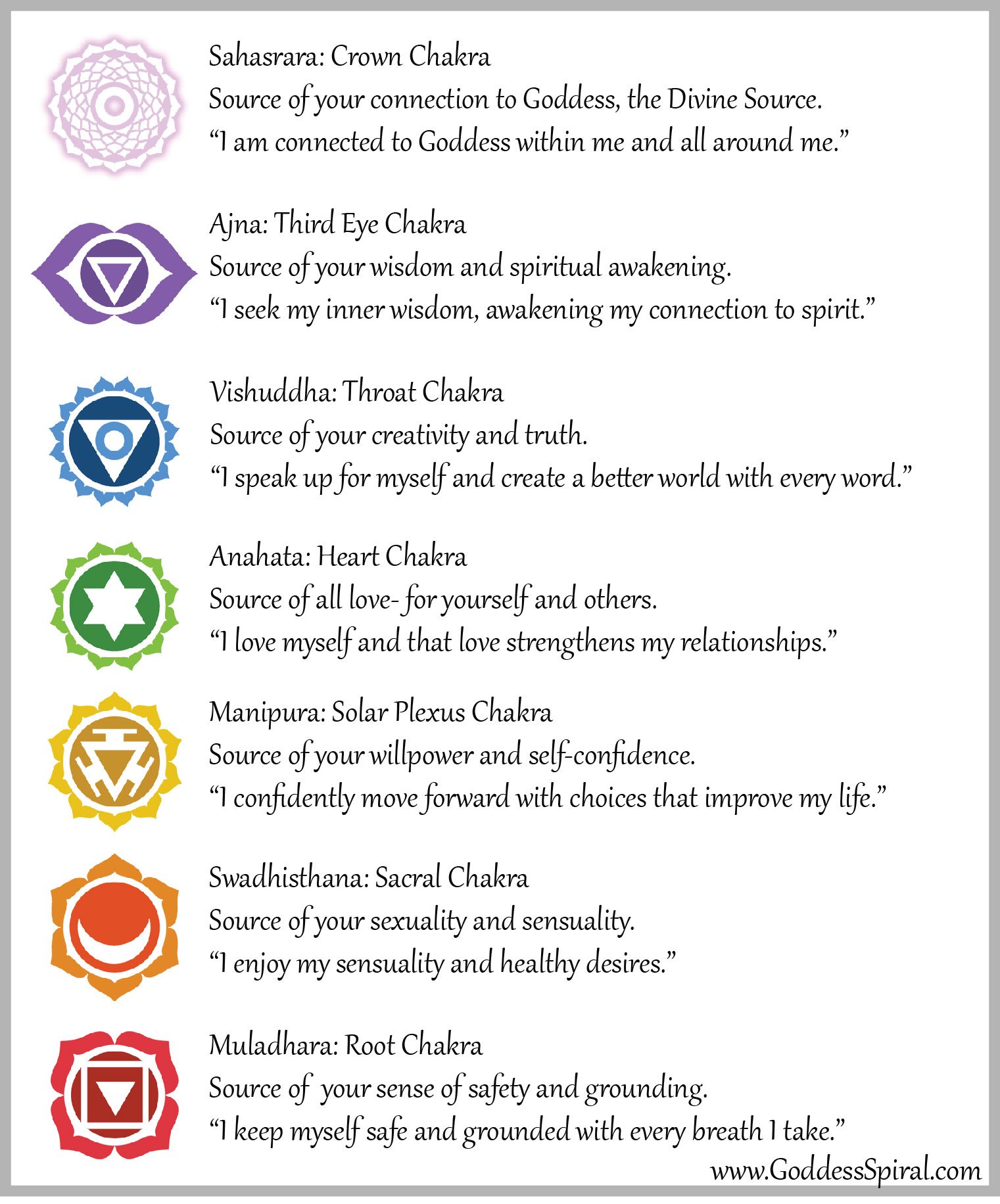
Muladhara (Root) — element: Earth; color: red; mantra: LAM. Located at the base of the spine (coccyx, pelvic floor, lower body). It grounds and steadies us and connects us to the Earth. When balanced, we feel safe, secure, and comfortable in close relationships; our basic needs are met and we feel grounded.
Svadhishthana (Sacral) — element: Water; color: orange; mantra: VAM. Located at the sacrum and in the pelvis (includes the bladder, kidneys, and sexual organs). When balanced, life flows with ease, we feel creative and joyful, and we can adapt to life’s changes.
Manipura (Solar Plexus) — element: Fire; color: yellow; mantra: RAM. Located in the belly (solar plexus) and lower ribs ( includes the stomach, nerves, and abdominal muscles). This area is sometimes called the “gut brain.” When balanced, we feel courageous, in touch with our personal power and innate wisdom. We are able to get things done.
Anahata (Heart) — element: Air; color: green; mantra: YAM. Located in the center of the chest around the heart. This is our energetic center of love and compassion. When balanced, we can give and receive love freely; we’re open-hearted, empathetic, and able to hold both joy and sadness without fear or anger.
Vishuddha (Throat) — element: Ether/Space; color: blue; mantra: HAM. Located in the throat, (includes the jaw, tongue, larynx, tonsils, esophagus, and trachea). When balanced, we speak our truth clearly and listen deeply to others.
Ajna (Third Eye) — element: Light; color: indigo/purple; mantra: OM. Located between the eyebrows and extending to the pituitary gland. Called the “third eye,” it’s the seat of inner seeing, clarity, wisdom, and intuition. When balanced, we are in tune with inner knowing.
Sahasrara (Crown) — no element, no color, no sound; symbol: white lotus. Located at the crown of the head (the fontanel in babies). It’s our connection to the source of all energy—Spirit, the Divine, universal consciousness. When balanced, there’s a felt sense of connection to something much greater than ourselves.